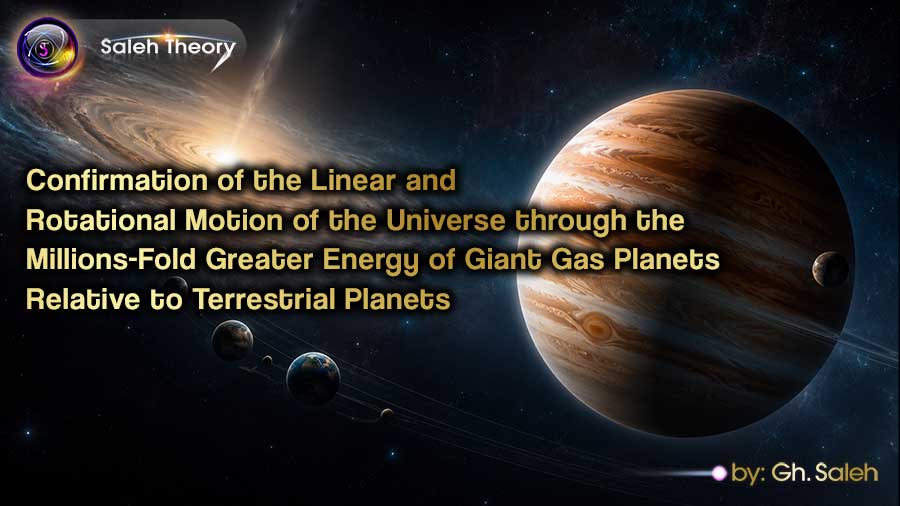
Confirmation of the Linear and Rotational Motion of the Universe through the Millions-Fold Greater Energy of Giant Gas Planets Relative to Terrestrial Planets
To calculated the latent energy of a planet in rotation, two distinct categories of calculation arise: rotational kinetic energy about its own axis (spin kinetic energy) and rotational kinetic energy about the central star of the system (orbital kinetic energy).
Should the two values of internal energy (spin kinetic energy) for the planets Earth and Jupiter be calculated, the following method is to be applied: the internal energy of a planet is approximately equal to one-half of the planetary mass multiplied by the square of the mean tangential velocity.
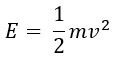
Thus, the energy of Jupiter relative to that of Earth is given by the ratio of Jupiter's mass multiplied by the square of Jupiter's mean tangential velocity, to Earth's mass multiplied by the square of Earth's mean tangential velocity.
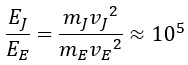
This ratio amounts to approximately 97,000. That is, on the order of 105 (the internal energy of Jupiter being tens to hundreds of thousands of times greater than that of Earth).
Should the above calculations be taken into consideration, the resulting energy differential proves to be a genuinely large figure, notwithstanding the expectation that the greater the distance of a planet from its central star, the lower its energy ought to be.
Two planets such as Jupiter and Earth nonetheless exhibit a substantial energy differential, since, in terms of mass, and even tangential speed of all constituent particles of the Jupiter exceeds a planet such as Earth in every respect.
The most satisfactory explanation and description is that, following the Big Bang and the Big Inflation, particles possessed not only linear motion but also rotational motion; within the giant planets of the Solar System, as well as within other planetary systems, the aggregate of these particles is capable of generating substantial rotational kinetic energy.
Should this principle be extended accordingly, it may be concluded that, from the smallest particle to the largest galaxies and beyond — extending even to the universe itself — rotational motion about one's own axis is a universal characteristic.
References:
[1] Saleh, Gh. The Reform Book: A Revolution in Modern Physics. Volume Ⅱ, Saleh Research Centre, 2026, https://saleh-theory.com/files/article/pdf/the-reform-book-a-revolution-in-modern-physics-vol2-2026.pdf
[2] Saleh, Gh. " A Simple and Fluent Explanation for the Greater Angular Velocity (Omega) of the Giant Gaseous Planets Compared with the Rocky Planets in the Solar System, in the Universe 2026." Saleh Theory, 10 JuL 2026, https://saleh-theory.com/article/a-simple-and-fluent-explanation-for-the-greater-angular-velocity-omega-of-the-giant-gaseous-planets-compared-with-the-rocky-planets-in-the-solar-system-in-the-universe-2026
[3] Saleh, Gh. The Reform Book: A Revolution in Modern Physics. Vol. 1, Saleh Research Centre, 2026, https://saleh-theory.com/files/article/pdf/the-reform-book-a-revolution-in-modern-physics-2026.pdf
[4] Saleh, Gh. "A Clear Explanation of the Approximate Volume of the Big Bang and Its Density in the Universe." Saleh Theory, 27 Nov 2025, https://saleh-theory.com/article/a-clear-explanation-of-the-approximate-volume-of-the-big-bang-and-its-density-in-the-universe
 Download PDF
Articles