
Eight Compelling Arguments Demonstrating that Photon Mass is Constant
The mass of Photon is one of the important and controversial subjects in modern physics. In standard physics, the photon is regarded as a particle of zero rest mass, and its energy is obtained from the Planck relation. Within the framework of Saleh Theory, however, the photon is regarded as a stable particle possessing a definite and constant mass.
The purpose of this section is to present a set of theoretical and empirical reasons that may be examined in support of the hypothesis that the intrinsic mass of the photon is constant for all photons, and that changes in photon energy do not necessarily imply a change in its mass.
The fundamental relation for photon energy is written as follows:
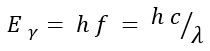
where:
• Eγ is the photon energy, h the Planck's constant, f the photon frequency, c the speed of light and λ the photon wavelength. The eight principal reasons are presented below.
1. The Origin of the Photon and the Constant Rest Mass of the Electron
Each photon is produced or emitted in electromagnetic processes associated with charged particles, particularly the electron. The mass of the electron is a fixed and definite quantity:

If the process of photon emission from an electron takes place under identical conditions, and the fundamental properties of the producing particle remain constant, it may be proposed that the resulting photons likewise possess a constant mass property.
Within the framework of Saleh Theory:
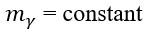
Therefore, differences in photon energy need not necessarily arise from differences in their mass; rather, they may arise from differences in frequency, wavelength, or other energy components.
2. The Relation Between Photon Energy, Frequency, and Wavelength
One of the most important properties of the photon is that its energy is dependent upon frequency:
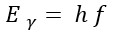
and, given the relation:

it follows that:
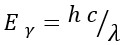
Therefore, if the wavelength of the photon changes, its energy changes accordingly. For two photons of different wavelengths:
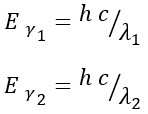
Consequently:
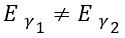
However, this difference in energy alone does not indicate that the intrinsic mass of the two photons differs. Within the framework of the constant photon mass hypothesis:

Thus, differing energies may be explained without assuming any change in the intrinsic mass of the photon.
3. Evanescent Waves and Penetration Depth
In the phenomenon of the evanescent wave, the field intensity decreases locally in the vicinity of the interface, and the penetration depth of the wave depends on the conditions of the medium. The penetration depth may generally be considered a function of the following parameters:

where:
• dp = penetration depth
• n1 and n2 = refractive indices of the media
• λ = wavelength
• θ = angle of incidence
Under many conditions, an increase in wavelength may result in an increase in penetration depth. On the other hand, according to the energy relation:
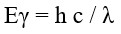
as wavelength increases, photon energy decreases:
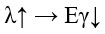
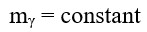
Therefore, a photon of lower energy may exhibit different propagation or penetration characteristics within a medium. This indicates that the behaviour of the photon within matter cannot be explained solely by a change in photon mass, since the observed variations may arise from the interaction between the wave and the medium. Within the framework of Saleh Theory:
4. The Differing Response of Solar Cells to Different Wavelengths
Solar cells do not respond identically to different wavelengths of spectrum. The amount of electrical energy generated depends on factors such as the semiconductor material, cell structure, absorption coefficient, and energy conversion efficiency. According to the photon relation:
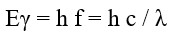
For red and violet spectrum:

Therefore:

That is, the energy of each red photon is lower than the energy of each violet photon. However, in an actual system, the amount of electricity generated does not depend solely on the energy of a single photon, but also on the number of photons absorbed and the conversion efficiency. Therefore, if under particular conditions red spectrum is able to produce a greater electrical output, this does not necessarily mean that the mass of the red photon is greater. Under the constant mass hypothesis:

Hence, differences in photon energy may exist without any change in their intrinsic mass.
5. Change in Wavelength in a Laser Owing to Cavity Temperature Change
In certain laser experiments, including systems employing a resonant cavity, a change in cavity temperature can alter the resonance conditions and, consequently, change the wavelength of the output radiation. If the output wavelength increases:

From the photon energy relation:
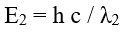
and:

Therefore, the output photon may possess a different wavelength and energy. This change may be attributed to a change in the physical conditions of the system, such as the refractive index, the effective cavity length, and the resonance conditions. Consequently, a change in the wavelength or energy of the output photon does not necessarily signify a change in the intrinsic mass of the photon. Within the framework of Saleh Theory:
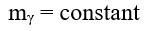
6. Differing Types of Photon Motion and the Independence of Mass from Energy
Within the framework of Saleh Theory, various components of photon motion are considered, such as linear, wave-like, rotational, or helical motion. In this model, the total energy of the photon may comprise several distinct components:

Consequently, a change in the total energy of the photon may arise from a change in the contribution of any of these components. Therefore, if the energy of the photon changes, it need not necessarily be concluded that its mass has also changed. Within this view:
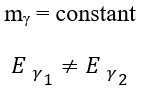
may hold simultaneously. In other words, a difference in energy between photons does not necessarily imply a difference in their intrinsic mass.
7. Redshift and Blueshift
One of the most significant phenomena demonstrating a change in photon energy is redshift and blueshift. In redshift:

Therefore:

In blueshift:

Therefore:

Thus, the energy of a photon may change at the point of observation. However, this change in energy does not necessarily signify a change in the intrinsic mass of the photon. Within the framework of constant mass:

Therefore, the change in photon energy may be regarded as independent of any change in its intrinsic mass. This constitutes one of the most important foundations of the constant photon mass hypothesis by Saleh Theory.
8. Conservation of Mass in the Process of Photon Emission
In the process of photon emission from an atomic or electronic system, energy is transferred from one state to another. For an atomic transition, it may be written:
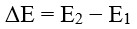
and the energy of the emitted photon is equal to:

Therefore:

In this process, the energy of the system changes; however, this change in energy alone does not constitute a reason for a change in the intrinsic mass of the photon. Within the framework of Saleh Theory, the photon, once produced, possesses its own constant mass:

and its energy may be determined by its frequency or wavelength:

A distinction may therefore be drawn between the intrinsic mass of the photon and the energy of the photon.
Conclusion
Examination of these eight arguments demonstrates that a distinction may be drawn between the intrinsic mass of the photon and its energy. The principal photon energy relation:

shows that photon energy is directly dependent upon frequency and wavelength. Therefore, a change in wavelength or frequency may bring about a change in photon energy.
On the other hand, within the framework of Saleh Theory, it is assumed that:

and, for different photons:

Consequently, it may hold that:
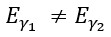
while
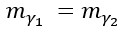
In this way, phenomena such as changes in wavelength, differences in photon energy, the behaviour of evanescent waves, the differing response of solar cells, changes in laser wavelength, and redshift and blueshift may be examined as phenomena related to changes in energy and to the interaction of the photon with the medium, without necessarily assuming any change in the intrinsic mass of the photon.
Within the framework of Saleh Theory, it may therefore be proposed as a hypothesis that the photon is a stable particle of constant intrinsic mass, and that a change in its energy does not necessarily signify a change in its mass.
It should be noted that, at present, these eight points must be regarded as theoretical arguments and motivations for the empirical investigation of the constant photon mass hypothesis. For this hypothesis to be transformed into an accepted scientific conclusion, a more precise mathematical model, testable predictions, and independent empirical evidence are required.
References:
[1] Peterson, A. W., Halter, M., Tona, A., and Plant, A. L. "High Resolution Surface Plasmon Resonance Imaging for Single Cells." BMC Cell Biology, vol. 15, 2014, article 35.
[2] Pecker, J.-C. "Possible Explanations of Non Cosmological Redshift." International Astronomical Union Colloquium, no. 37, 1977, pp. 451–479.
[3] Saleh, Gh. The Reform Book: A Revolution in Modern Physics. Volume Ⅱ, Saleh Research Centre, 2026, https://saleh-theory.com/files/article/pdf/the-reform-book-a-revolution-in-modern-physics-vol2-2026.pdf
[4] Saleh, Gh. The Reform Book: A Revolution in Modern Physics. Vol. 1, Saleh Research Centre, 2026, https://saleh-theory.com/files/article/pdf/the-reform-book-a-revolution-in-modern-physics-2026.pdf
[5] Saleh, Gh. " New Explanation Concerning Photon Constants Part A 7 strong reasons that demonstrate the mass of photon is constant." Saleh Theory, 28 Jun. 2025, https://saleh-theory.com/article/new-explanation-concerning-photon-constants-part-a-br-7-strong-reasons-that-demonstrate-the-mass-of-photon-is-constant
[6] Saleh, Gh. "A New Proof of the Constancy of Photon Mass Using Its Initial Energy." Saleh Theory, 06 Mar. 2025, https://saleh-theory.com/article/a-new-proof-of-the-constancy-of-photon-mass-using-its-initial-energy
[8] Saleh, Gh. "Photon has a Constant Rest Mass!." Saleh Theory, 16 Mar. 2018, https://www.saleh-theory.com/article/photon-has-a-constant-rest-mass
 Download PDF
Articles

C) Characteristics of the Amaterasu Particle (Cidtonium)